
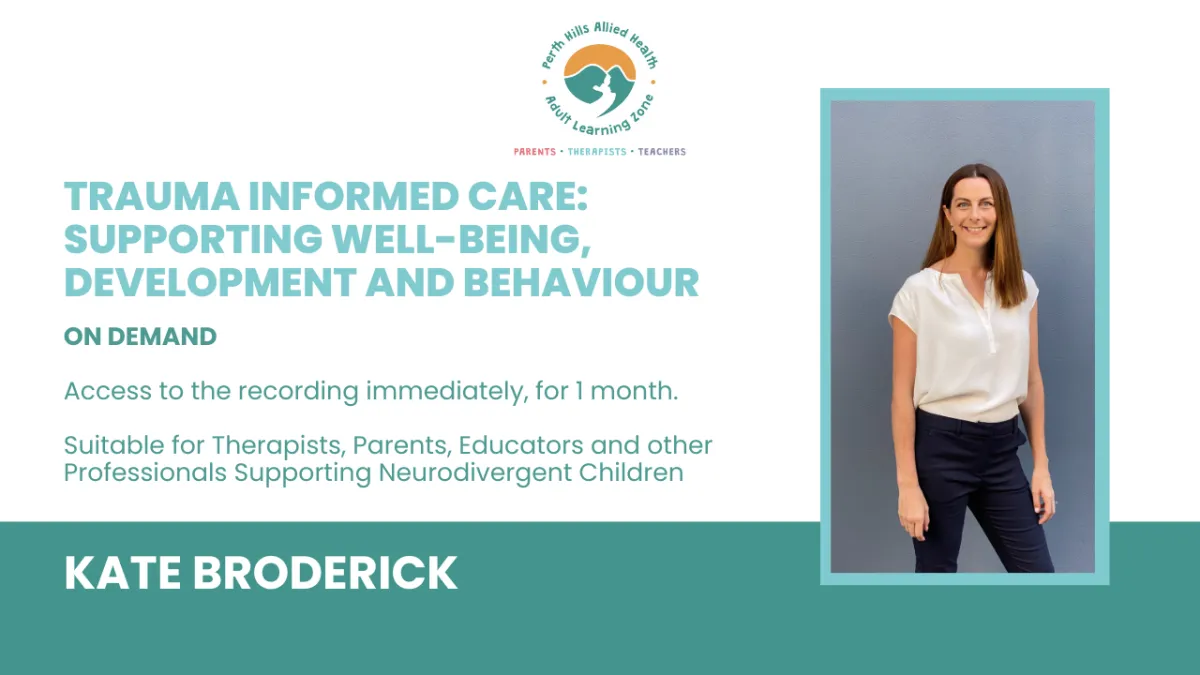
Trauma Informed Care: Supporting Well‑being, Development and Behaviour
On Demand - Get Immediate access
How does trauma-informed work support children’s wellbeing, development and behaviour?
Trauma-informed work helps us shift the way we understand children’s behaviour. Instead of asking “What’s wrong with this child?” we begin to ask “What has this child experienced, and what do they need to feel safe right now?”
When children have experienced stress, trauma or ongoing nervous system overload, their brains and bodies adapt to survive. Behaviour is not a choice in these moments, it is communication. Trauma-informed work recognises this and responds with connection, safety and understanding rather than control or punishment.
By focusing on nervous system safety, trauma-informed approaches support children to:
Feel safe in their bodies and environments
Develop trust in the adults around them
Build regulation skills over time
Access learning, play and relationships more easily
When children feel safe, their brains are better able to engage in development. Emotional regulation, communication, learning and social connection all become more accessible. Behaviour naturally shifts because the child no longer needs to rely on protective or survival responses.
Trauma-informed work also supports the adults who care for children. It offers a framework that reduces blame and overwhelm, helping adults respond with calm, consistency and compassion, even in challenging moments.
Ultimately, trauma-informed work creates environments where children are supported to grow, develop and belong, exactly as they are.
Learning Outcomes
By the end of this webinar, attendees will be able to:
1. Define the Core Principles of Trauma-Informed Practice Participants will gain a clear definition of what "trauma-informed" truly means, moving beyond buzzwords to understand the fundamental shift from behavioural management to supporting underlying physiological needs.
2. Explain the Physiology of the Nervous System and Safety Attendees will be able to describe how the autonomic nervous system functions to protect us (the stress response), and identify the specific physiological signs of safety versus defense in children.
3. Analyse the Link Between Development and Regulation Participants will explore the interplay between developmental domains—specifically sensory processing and executive functioning—and how deficits or strengths in these areas influence a child's perception of safety.
4. Evaluate the Role of Attachment in Behaviour Attendees will understand how secure attachment and co-regulation serve as the primary drivers for well-being and "good" behaviour, reframing challenging behaviours as requests for connection or regulation rather than non-compliance.
5. Apply Practical Strategies in Educational and Family Settings Participants will acquire a toolkit of actionable guidelines and relationship-based strategies to implement trauma-informed care within classrooms, clinics, and family environments.
Who it’s for?
This webinar is ideal for professionals and caregivers who support children’s wellbeing, development and behaviour, and who want a deeper, more practical understanding of trauma-informed, neurodiversity-affirming care.
It’s especially suited for:
Allied Health Professionals
Occupational Therapists, Speech Pathologists, Psychologists, Counsellors and other therapists working with children and familiesEducators & School Staff
Teachers, learning support staff, school leaders, education assistants and early childhood educatorsProfessionals Supporting Neurodivergent Children
Those working with children who experience sensory differences, emotional regulation challenges, behavioural distress or developmental vulnerabilitiesParents & Carers
Parents, foster carers and caregivers who want to better understand their child’s nervous system, behaviour and emotional needsAnyone Wanting Practical, Compassionate Tools
For supporting regulation, connection, safety and “good” behaviour across home, therapy and educational settings
WHAT'S INCLUDED?
Live 3-hour interactive webinar
Delivered by Kate Broderick, with practical, real-world insights you can apply immediatelyProfessional learning grounded in trauma-informed, neurodiversity-affirming practice
Designed for therapists, educators, parents and carers supporting children across home, therapy and educational settingsClear explanations of the nervous system and behaviour
Helping you understand why children respond the way they do, not just what to doPractical strategies and guidelines
To support regulation, connection, safety and development in everyday situationsWebinar recording access for 1 month
Watch again, reflect, or catch up if you can’t attend liveAccess to evidence-informed concepts and tools
That can be integrated into family life, therapy practice and educational environments
Cost: $225 (incl. GST)
About Kate Broderick

Kate Broderick is a dual-qualified Occupational Therapist and Speech Pathologist with over 20 years’ experience supporting children, families and educators across therapeutic and educational settings.
Kate brings a deeply practical and compassionate approach to her work, grounded in trauma-informed and neurodiversity-affirming practice. She is particularly passionate about helping adults understand the why behind children’s behaviour through the lens of nervous system safety, development and connection.
In addition to her professional experience, Kate is also a parent of four children, some of whom are neurodivergent. This lived experience shapes her work and strengthens her commitment to realistic, respectful strategies that support children and the adults who care for them in everyday life.
Kate regularly delivers professional learning to therapists, educators and schools, and is the founder of Neuroway, previously known as Spot Training Hub. She is also the creator of practical tools designed to support trauma-informed communities, including the upcoming children’s storybook In Our Classroom.
Kate is known for translating complex concepts into clear, relatable and actionable insights, empowering professionals and caregivers to support children’s wellbeing, development and behaviour with confidence and care.
You’ll feel at home here if:
You want to understand children’s behaviour through safety, connection and nervous system support, not compliance or control
You’re curious about trauma-informed and neurodiversity-affirming practice but want it explained in clear, practical ways
You work with or care for children who experience big feelings, shutdown, overwhelm or behavioural distress
You’re looking for approaches that reduce blame and help both children and adults feel more supported
You value compassion, reflection and learning that feels grounded in real life, not theory alone
You want to leave feeling calmer, clearer and more confident in how you respond to children
This space is for people who believe that behaviour makes sense and that children do well when they feel safe, seen and supported.

Facebook
Instagram
Website